
Thursday, May 28, 2015
What I Learned from this Course


Monday, May 4, 2015
What I Learned from Unit 12

Introduction
So I recently took a bunch of surveys and turned in some projects about jobs and career choices. It made me ask myself some doubt-filled questions about my future. "What kind of job will I have, and will I even be good enough for the job I really want? What kind of person will I be? Will people like me? Will I like me?" So far, none of those questions show any signs of being answered any time soon, but the surveys I took showed me what kind of jobs the current me might have and the kind of person I am(according to survey results).What I Learned
About My Possible/Likely Careers
According to the survey results from checkoutacollege.com, I'm likely to be happiest in one of the following career fields:- Arts, A/V Technology and Communications
- Human Services
- Law, Public Safety, Corrections and Security
I wasn't necessarily floored by the first two suggestions
About Myself
According to Human-metrics, I am an INFJ personality type. I have to say, I was surprised by how very similar the description of this personality type was to my actual self.
What is an INFJ?
"Strongly humanitarian in outlook, INFJs tend to be idealists, and because of their J preference for closure and completion, they are generally "doers" as well as dreamers."
"Usually self-expression comes more easily to INFJs on paper, as they tend to have strong writing skills. Since in addition they often possess a strong personal charisma, INFJs are generally well-suited to the "inspirational" professions such as teaching (especially in higher education) and religious leadership. Psychology and counseling are other obvious choices..."
"Beneath the quiet exterior, INFJs hold deep convictions about the weightier matters of life.Those who are activists - INFJs gravitate toward such a role - are there for the cause, not for personal glory or political power."
"Accurately suspicious about others' motives, INFJs are not easily led.These are the people that you can rarely fool any of the time.Though affable and sympathetic to most, INFJs are selective about their friends."
My Thoughts on my Personality
"Accurately suspicious about others' motives, INFJs are not easily led.These are the people that you can rarely fool any of the time.Though affable and sympathetic to most, INFJs are selective about their friends."
My Thoughts on my Personality
As previously noted, I was surprised by the accuracy of these statements. It turns out that I have thought about being a teacher once or twice, and I do have a passion for writing even though I don't think I'm that good at it...I intend to improve at some point. It's also true that I can only be really open and expressive (on a personal level) with those that I'm close to. I often find myself thinking about social issues and forming my own opinions about them, and am more often than not able to tell if someone's lying to me.
http://www.humanmetrics.com/personality/infj
http://checkoutacollege.com/explorecareers/interestsurvey.aspx
Friday, March 27, 2015
The Consesquences of Online Immunity
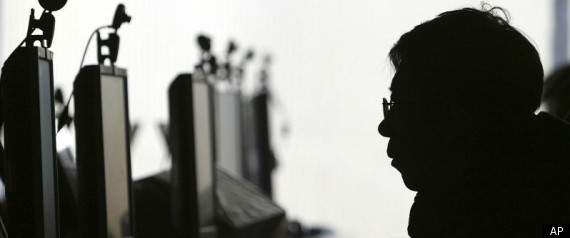
Introduction
In the modern day, it's rare that anyone from 4 to 55 years of age will tell you they haven't used the internet at least once. Or even been in the same room with a computer for that matter. It's even rarer that you'll see a postMy thoughts
A lot of people like to think that they can say any negative thing that comes to mind when browsing the internet because they feel secure behind a computer screen. And of course, for the most part, they're right. But while they can say mean or insulting things on the internet, it doesn't mean that they should. One reason for this is because cyber bullying is, as it should be, illegal in some states. Therefore, in certain circumstances, you could go to jail if you get caught tormenting someone online. Another reason is that it's absolutely barbaric to victimize someone just because you can...remember Hitler?Another thing that many cyber bullies don't realize is that online bullying makes them look immature, dumb, and cowardly. With them being oblivious to this, it's easier for them to say and do harmful things online without worrying about their "reputation". True, it may not hurt their "online reputation", but if someone they know discovers that the cyber bully has been, well, cyber bullying, it could have far reaching consequences.
Say it was their boss or potential boss; if the boss finds out about the rather unprofessional activities their (future) employee does in their spare time, it could cost that employee the job that they probably would have had otherwise. Nonetheless, cyber bullies overlooking facts like this is yet another reason that it's easier for them to insult people on the internet than to their face.
Conclusion
Cyber bullying is kind of similar to muttering some pretty awful things about someone under your breath. People feel better about knowing no one heard them call somebody a "worthless hunk of meat and bones" under their breath. Similarly, cyber bullies feel safer and more powerful knowing that they can say something as offensively as they want to because no one will ever know it was really them.Sources
http://i.huffpost.com/gen/318871/images/r-ONLINE-ANONYMITY-large570.jpg
Wednesday, March 18, 2015
Should People who Ilegally Download Items be Punished?
 Intro
Intro
Every now and then people look for alternative ways to obtain software. These alternatives sometimes include finding ways to get software for cheap, or for free. In this post, I'm going to discuss whether or not the people who illegally download items should be punished.
My Thoughts
On the Unknowledgeable
People have their reasons for committing piracy, and people also have their reasons for using products obtained through piracy.Take Gus for example: Gus has been in need of cash for a while. If he doesn't find a way to get some money soon, everything in his life could hit rock bottom. Then someone offers Gus free money, no strings attached, except that he can't tell anyone where he got it from. When it appears to Gus that the deal is legitimate he takes the money. Seems like it's his lucky day right? Wrong, what Gus doesn't know is that the money he's just received is stolen, and that the police are looking for someone who has recently obtained the exact amount of $15,000. If Gus is caught with this money he could go to jail for a crime he didn't commit. Is that really fair, considering that Gus didn't even know he was receiving stolen money? The answer is no.
Sometimes, people believe that they're obtaining free or cheap software from an approved, legitimate source
On the Knowledgeable
Our next example is Tom. Tom is what some people refer to as a music junkie. He's constantly streaming music, falling in love with new artists, and looking for the newest hit tracks. But sometimes, Tom comes across a new album or song that he has to pay for in order to listen to. But Tom has a trick up his sleeve. Instead of paying for music, Tom goes to a website where he knows he can download free music, old and new. He searches for the music he's looking for, and downloads it. Does Tom know that what he does is illegal? Yes he does, but he doesn't care because he only does it from time to time, and no one is ever going to find out anyway. Or will someone?Tom is our example of a semi-frequent illegal downloader. These are the people who sometimes illegally download things they would normally have to pay for. Downloading things like movies, instead of watching them on something like Netflix. Or games from online game services like Steam or Origin. Should these people be punished for knowingly partaking in illegal downloading? Well, yes but not too harshly. This is because these people aren't even half as bad as those who practically make a hobby out of illegal downloading. In fact, people like Tom might not even be aware of the damage they're inflicting on people and companies. But still, in certain cases, they should have to own up to what they've done, because they knew it was wrong when they were doing it.
Sources
http://yubanet.com/uploads/2/illegaldownloading.gifhttp://www.urbandictionary.com/define.php?term=music+junkie
Friday, February 27, 2015
Once it's on the Internet...

Intro
Everyone knows that once you put something on the internet, it's there forever, even if you "delete" what you posted. This basically means that there is always some way for any and everybody to view things that you post on the internet. With this post, I intend to give a few tips on how to make your information more anonymous, even if it becomes accessed.Tip #1
Use an alias
Firstly, you should use a fake name in all of your non-business user accounts. For things like banking, school, or work you should use your real name online if necessary. But when it comes to things like social networking, online games, or streaming services, it's best to keep your identity unknown whenever and wherever possible.Tip #2
Have separate e-mail addresses
It's wise to have two different e-mail addresses. One for work, and one for play. Or if you really want to be organized, you could also set aside a separate e-mail for your social life. Upon choosing to have separate e-mail addresses, you should also have separate passwords for them, and usernames that aren't too similar to each other. For the non-work-related e-mail addresses, you could use an alias if you have one. This way, it's not as obvious that you're the owner of all those different accounts.Tip#3
Be careful what you post
This final tip isn't about safety so much as it is about being sensible. If you're going to post something on the internet, make sure it's proofread if it's a statement. And if it's an angry/disagreeing statement, make sure it gets your point across in a calm, respectful way. If it's an image or video, consider whether or not it's appropriate for just anyone to see. Would you want a stranger to know what you're about to post? How about your friends or family? If not, it's better to keep it to yourself, and not post it the internet.Sources
Picture: https://encrypted-tbn2.gstatic.com/images?q=tbn:ANd9GcSb50kU09cQ92Z5ayZCWKqvhsNGL_fDaWEl-hyTxkX6-hhzbGNSAA
Wednesday, February 11, 2015
2015 Technology Thoughts


Intro
I read another article again today about coming technology in 2015, and I have to say I was intrigued. Not so much at the amount of progress mankind has made with technology, (even though it's considerable), but rather at the things people will be able to do with these new coming devices.My Thoughts
On the article
In a nutshell, the article was about the coming technology for 2015, how to prepare for it, and what to expect out of it. It touched on some of the upcoming devices and operating systems from most of the major tech companies including Microsoft, Apple, and Google, in that order. It also talked about things like cars becoming smarter, TV's becoming better and larger, and ditching cable television for streaming services, which some people are already doing.Drawbacks of Advancement
After reading about what to expect out of the coming devices of this year, I couldn't help but wonder what kind of impact the new tech would have on teen and young adult society. Most of which is, in my opinion, already frighteningly dependent on the technology advances we have now. What happens if the newer generations become too obsessed with/dependent on these new devices? Will a time come where people just forget how to help themselves altogether? While that's very much possible, I still think it'll take a while before people just throw do-it-yourself out the window. In another decade or so? Maybe.Positives of Advancement
According to the article, it will soon be possible for your phone to become more helpful to you in everyday life by becoming more "intelligent". This is something that was predicted/wished for by many people ever since Siri came onto the technology scene in 2010. Now, five years later it has the possibility of actually happening.The article also discussed "your phone replacing your wallet". This, it would seem, is being made a potential reality with apps like Apple Pay, which is an app that enables users to pay for things using their phones instead of credit cards and cash. According to the article, there are also apps in development for virtual drivers licenses, door keys, and proof of insurance. If you ask me, that gives people all the more reason rob others of their phones and tablets, and is a huge security risk. However, it could also be beneficial to people in terms of convenience.
Sources
Photo
http://app.sparksonline.com/hs-fs/hub/354560/file-2416618411-jpg/digital_diagram_business_and_technology_by_prophotostock-d711fj6.jpgArticle
http://www.wsj.com/articles/the-tech-that-will-change-your-life-in-2015-1419965733
Wednesday, January 21, 2015
My Thoughts on Password Safety

Intro
It's important to have a secure password. This is obvious, of course. Because if your password isn't safe, your information, personal or otherwise, could be at risk. I read an article about passwords today, and basically it talked about how people have been using simple, easy-to-guess passwords like "12345", despite hacking risks.My Opinions
On the Article
The article really gave me a new viewpoint on the world of passwords and password protection. It presented the idea that the security/safety of passwords, while mainly dependant on the password user, still somewhat falls into the hands of the website creators themselves. This had occurred to me long before reading the article, but it never really burrowed that deep into my mind. The article gives examples of how major websites like twitter are making an effort to keep people from choosing simple passwords. But in contrast, it gives another example of other popular sites like eBay having conflicts about how to beef up their password security methods. Upon reading this, I realized that while it's easy to create a strong password, it's not so easy for companies/websites to make sure that passwords and information stay protected.On Password Protection
Really, it all boils down to how durable your password is in the first place. (If you want tips, here's a presentation I made on how to create a safe password). In terms of strong password creation, the possibilities are endless as to what you can come up with. All you really need is a sliver of an imagination. Of course, it doesn't entirely depend on the password itself. You should be smart about how you use your password. For example, it's not necessarily wise to use the same password for everything. But at the same time, you shouldn't have too many different passwords between websites, or you might forget some of them. My advice is to create your own password system. This is where you take a password, or several passwords, and devise a strategy for how you use each one across the internet. Maybe you could slightly change the one password (if that's all you have), for each website that you use.
Sources
Article
Picture
Subscribe to:
Comments (Atom)